USA: Nõelravi on eakate kroonilise alaseljavalu puhul efektiivne, ohutu ja kulutõhus ravimeetod.

Alates 2020. a tasub USA ravikindlustus nõelravi eest kroonilise alaseljavalu puhul.

Acupuncture for Chronic Low Back Pain in Older Adults:
A Randomized Clinical Trial (2025 USA)

https://pubmed.ncbi.nlm.nih.gov/40938602

Key Points

Question Is acupuncture needling (both a standard acupuncture course and additional maintenance sessions) an effective treatment for older adults with chronic low back pain (CLBP)?

Findings In this randomized clinical trial that included 800 older adults with CLBP, acupuncture needling (both a standard course and additional maintenance sessions) improved pain-related disability with CLBP at 6 months and 12 months, with no statistically discernible benefit of additional maintenance sessions.

Meaning These findings suggest that acupuncture needling is an effective and
safe treatment option for older adults with CLBP.

Acupuncture has demonstrated effectiveness for CLBP is recommended by the American College of Physicians guidelines as first-line care for treating CLBP and has an excellent safety profile reported across large studies.
Acupuncture also improves sleep and emotional symptoms,
which are common concerns among older adults with CLBP.
However, no large-scale randomized clinical trials have focused on adults
aged 65 years or older,
and the optimal dose and timing of acupuncture are unknown for older adults.

This 3-arm trial compared
– a standard acupuncture (SA) course
(8-15 sessions across 12 weeks plus usual medical care [UMC]) and
– an enhanced acupuncture (EA) course
(SA plus 4-6 additional sessions across the subsequent 12 weeks) with
– UMC (usual medical care) alone
for improving CLBP-related disability among adults aged 65 years or older.

Participants
Recruited individuals were aged 65 years or older with nonspecific CLBP
(with or without radicular symptoms [sciatica]) persisting for 3 months or longer.

Conclusions
In this randomized clinical trial of older adults with CLBP, acupuncture needling provided greater improvements in CLBP-related dysfunction at a 6-month and 12-month follow-up compared with UMC alone with the advantage of a low-risk profile. These findings support acupuncture needling as an effective and safe treatment option for older adults with CLBP.


Cost-effectiveness of acupuncture needling
for older adults with chronic low back pain
Randomized Controlled Trial (2026 USA)
https://pubmed.ncbi.nlm.nih.gov/41493335/

Acupuncture is a recommended first-line non-pharmacological treatment for chronic low-back pain (CLBP) and has been shown to be effective as well as cost-effective for CLBP.
In 2020, Medicare began covering acupuncture for CLBP in older adults.

The purpose of this study was to conduct a full economic evaluation
(cost-utility and cost-effectiveness analyses) of usual medical care (UMC)
compared to UMC plus two different acupuncture protocols for older adults with CLBP.

Both EA and SA reduced non-acupuncture healthcare costs and may be cost-effective as compared with UMC for older adults with CLBP in these three large healthcare systems in California and Washington State.
These findings suggest that EA, and to a lesser extent SA, may provide cost-effective treatment
for CLBP for the healthcare sector and Medicare.

Acupuncture for chronic low back pain in older patients:
a randomized, controlled trial (2003 USA)
https://pubmed.ncbi.nlm.nih.gov/12890859/
Rheumatology (Oxford) 2003;42:1508–1517

Conclusions.
Acupuncture is an effective, safe adjunctive treatment for chronicLBP in older patients.
Fewer acupuncture subjects had medication-related side-effects compared with the control group.


Rubriigid: Uncategorized | USA: Nõelravi on eakate kroonilise alaseljavalu puhul efektiivne, ohutu ja kulutõhus ravimeetod. kommenteerimine on välja lülitatud

Uuringud

Current status of neuroimaging research
on the effects of acupuncture:
a bibliometric and visual analyses
(2022 China)

An econometric analysis of the national and regional characteristics of
acupuncture neuroimaging studies was performed.
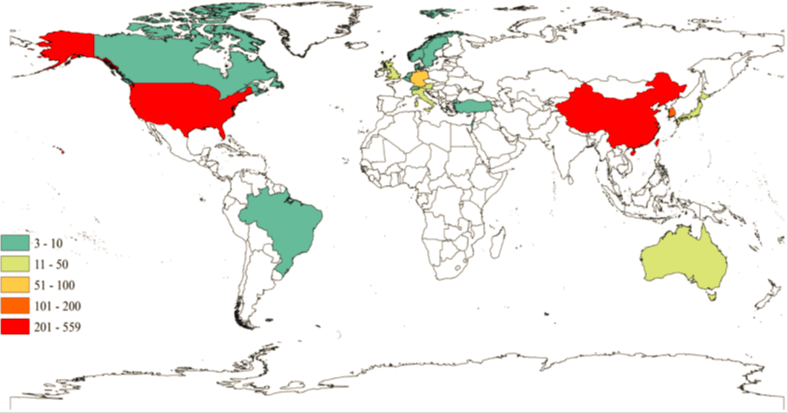
The results showed that 15 countries,
led by China, the United States, South Korea and Germany,
show a significant central tendency.

China and the United States were the top two countries that aided
neuroimaging research on acupuncture effect.

The country distribution map of the neuroimaging research
on the effects of acupuncture

In 1995, the American Journal of Traditional Chinese Medicine first reported
that fMRI imaging could be used as a non-invasive method to observe
the brain response caused by acupuncture stimulation.
In 2000, a study using PET imaging technology reported
that the acupuncture of Zusanli (ST36) increased glucose metabolism
in the plant’s nerve centre, which is related to gastric function.
In 2011, for the first time, it was reported that Zusanli (ST36) acupuncture
could specifically induce neural responses in the pain-inhibiting region using MEG,
while Neiguan (PC6) acupuncture
could specifically induce the activities of the insula and amygdala.
In 2000, Hui Harvard University and Massachusetts General Hospital proposed
the ‘negative activation of the limbic system’ theory of acupuncture..
In 2008, Dhond et al. proposed the multi-network hypothesis:
the complex mechanism of acupuncture modulates
the ‘default brain network and somatosensory motor network’.
In 2009, Fang et al. further proposed the theory of
‘limbic-paralimbic-neocortical network’ regulation by acupuncture.
Tian et al: The characteristic effect of acupuncture via
‘Spatio-temporal coding brain networks’.

Integrative research on the mechanisms of acupuncture mechanics and interdisciplinary innovation (2025 China)

This paper delves into the entire mechanical process of acupuncture, from skin penetration to point stimulation, and analyzes tissue responses to provide a solid theoretical foundation for the scientific study of acupuncture.


The Mechanism of Acupuncture Regulating Autophagy:
Progress and Prospect (2025 China)

https:/pubmed.ncbi.nlm.nih.gov/40001566//

Apoptosis and autophagy are two important cellular processes
which control cell survival or death,
and also considered as a balanced response to pathogens and
other immune stimuli that play an important role in maintaining physiologic homeostasis.
There are few effective and safe ways to regulate cell apoptosis and autophagy
in clinical practice right now.
Modulation of acupuncture on cell apoptosis and autophagy (2017, China)

Regulating autophagy is one of the mechanisms
through which acupuncture exerts its therapeutic effects.

The regulatory effect of acupuncture on autophagy capacity is bidirectional:
it inhibits the abnormal activation of autophagy to prevent exacerbation of injury
and reduce apoptosis, while also activating or enhancing autophagy
to promote the elimination of inflammation and reduce oxidative stress.

Autophagy is a complex molecular pathway by which eukaryotic cells
degrade longlived proteins, organelles, and pathogens,
and recycle some of the energy required for recirculation to maintain
cellular and organismal homeostasis.

Autophagy is involved in intercellular communication;
responding to cellular stress; senescence, and death;
inhibiting inflammatory responses; and improving organismal metabolism.

Acupuncture promotes self-regulation through an autostable mechanism,
with its direction of action contingent on the body’s pathological conditions.
Whether addressing abnormal autophagy resulting from various diseases
(either overactivation or under-activation) or
autophagy disorders that manifest at different stages of the same disease,
acupuncture can help restore the body’s functions from a biased state to a balanced one.
This underscores the bidirectional regulatory effect of acupuncture.

This paper systematically reviews the research progress on the use of acupuncture
for treating various diseases via the autophagy pathway.

Revealing the magic of acupuncture based on biological mechanisms:
A literature review (2022 China)

https://pubmed.ncbi.nlm.nih.gov/35153276/

The current review describes the common indications for acupuncture
recommended by the WHO and the use of acupuncture
in China, the United States, Australia,
and several other countries.
This review then summarized the mechanisms by which acupuncture treats
common conditions including lower back pain (LBP), ischemic stroke,
depression, and irritable bowel syndrome (IBS).

Understandings of acupuncture application and mechanisms
(2022 Taiwan)
https://pubmed.ncbi.nlm.nih.gov/35422904/

Adenosine triphosphate (ATP) and transient receptor poten­tial vanilloid (TRPV)
channels are involved in the stimulation of acupuncture at the acupoint area.
In the central nervous system (CNS), neurotransmissions including opioids,
serotonin, norepinephrine, orexin and endocannabi­noid are modulated
by acupuncture to induce analgesia.
Moreover, acupuncture reduces cyclooxygenase-2 (COX-2) and prostaglandin E2 (PGE2) levels on the peripheral level by acting on the hypothalamic-pituitary-adrenal (HPA) axis, mediating peripheral opioid release.
Acupuncture helps to treat insomnia by inhibiting sympathetic activity and
down-regulating the HPA axis.
Additionally, acupuncture reduces the effects of positive and negative reinforcements
by modulating dopamine release in the nucleus accumbens.

Recently, i-needles have been developed to allow for the analysis of metagenomics,
meta-transcriptomics, and host-microbiome relationships following acupuncture,
while skin implantable microsensors or needle-shaped microsensors are feasible
for monitoring real-time microen­vironmental changes in acupoints and even target organs.

These studies may further accelerate the understanding of acupuncture’s action mechanism.

Rubriigid: Uncategorized | Uuringud kommenteerimine on välja lülitatud

Nõelravi, Qi, ATP

NÕELRAVI TOIMEMEHHANISM

Mitokonder on raku organell, mis toimib raku „jõujaamana“.
Mitokondrites sünteesitakse adenosiintrifosfaati (ATP), mis on  organismi kõige tähtsam energiakandja. ATPd kasutatakse organismi talitluseks.
                                                             https://et.wikipedia.org/wiki/Tsitraadits%C3%BCkkel

Hiina meditsiinis mõistetakse eluenergia e qi all põhiliselt talitlust.
Qi materiaalseks baasiks  võivad olla mitokondrid.
Nõelravi ja hiina taimravi toime on seotud ATPga.

                                                             
The real-time detection of acupuncture-induced
extracellular ATP mobilization 
in acupoints and exploration of its role in acupuncture analgesia

(2022, China)

https://link.springer.com/article/10.1007/s11302-021-09833-3

This work reveals that needling elicits a transient extracellular ATP (eATP) mobilization
in acupoints, which contributes to initiating AP analgesia.
This study will help us better understand the peripheral mechanism of AP analgesia and guide clinicians to optimize the needle manipulations to improve AP efficacy.

Dr. Wallace: “TCM and western medicine will meet at mitochondria.”
Wallace, D.C. (2008) Mitochondria as Chi. Genetics , 179, 727-735.
https://doi.org/10.1534/genetics.104.91769

Targeting Mitochondrial Homeostasis:
The Role of Acupuncture in Depression Treatment

(2023, China)
https://pmc.ncbi.nlm.nih.gov/articles/PMC10404048/pdf/ndt-19-1741.pdf
https://pubmed.ncbi.nlm.nih.gov/37546517/

Results: Acupuncture has been found to regulate mitochondrial homeostasis (by modulating mitochondrial autophagy, reducing mitochondrial oxidative stress, inhibiting mitochondrial fission, inducing mitochondrial biogenesis, and maintaining mitochondrial dynamics), alleviate depression-like behavior, and regulate signal pathways and key proteins.

Conclusion: Here, we highlight the role of acupuncture in the treatment of depression.
A comprehensive exploration of the impact of acupuncture on mitochondrial homeostasis could potentially present a novel mechanism for treating depression and offer fresh perspectives for the treatment of patients with clinical depression

Effect of acupuncture on the energy metabolism of dogs with intervertebral disk disease and cervical disk herniation: A pilot study
(2022, Japan)
https://pmc.ncbi.nlm.nih.gov/articles/PMC10209300/pdf/11259_2022_Article_10051.pdf
https://pubmed.ncbi.nlm.nih.gov/36536227/

Acupuncture treatments may activate the citric acid cycle and increase ATP production,
followed by improvement of the disease.

The Effect of TCM Herbs on Mitochondrial Functions:
The Linkage between Qi and Mitochondria

(2020; China, USA)
https://www.scirp.org/journal/paperinformation?paperid=106653

Studies conducted by Ko et al. have shown that the Yang-invigorating and Yin-invigorating herbs have different impacts on mitochondrial function, with Yang-herbs enhancing ATP generation, and Yin-herbs increasing the immunomodulatory function of cells (2003-2011).
The linkage between mitochondria and Qi/Chi was first introduced by Dr. Wallace,
who proposed that TCM herbs would cure mitochondria related diseases.

Expounding the functions of qi in TCM based on the effect mitochondria
(2014, China)
https://pubmed.ncbi.nlm.nih.gov/25223169/

The function of mitochondria is similar to that of qi. When the disorder of qi and mitochondria occurs, similar vital signs occur or the same reactions occur.
These results suggested that the basic material attribute of qi might be mitochondria.

Mast cell-nerve cell interaction at acupoint:
modeling mechanotransduction pathway induced by acupuncture.

(2014, China)
https://www.ncbi.nlm.nih.gov/pubmed/24910530

The results showed mechanical stimuli lead to a intracellular Ca(2+) rise in the mast cell and ATP release, ATP diffuses in the extracellular space (ECS) and activates the nearby nerve cells, then induces electrical current in the nerve cell which spreads in the neural network.
 
This study may facilitate our understanding of the mechanotransduction process induced by acupuncture and provide a methodology for quantitatively analyzing acupuncture treatment.

The function of mitochondria is similar to that of qi. When the disorder of qi and mitochondria occurs, similar vital signs occur or the same reactions occur.
These results suggested that the basic material attribute of qi might be mitochondria.

In Vivo Visualization of the Pericardium Meridian with Fluorescent Dyes
(2021; China, Israel, USA Harvard Medical School)
https://pmc.ncbi.nlm.nih.gov/articles/PMC8021474/pdf/ECAM2021-5581227.pdf
https://pubmed.ncbi.nlm.nih.gov/33854554/

Rubriigid: Uncategorized | Nõelravi, Qi, ATP kommenteerimine on välja lülitatud

Nõelravi leevendab muskuloskeletaalset valu

Duke Ülikool (2024, USA):
Muskuloskeletaalsete valude puhul nõelravi lisamine tavaravile parandab oluliselt ravitulemust.

Kui patsiendid pöörduvad muskuloskeletaalsete (lihastest, sidemetest ja luudest)
lähtuvate valude tõttu EMOsse, on see tavaliselt tugev.
Nn tavaravile allub see halvasti, muutub sageli krooniliseks, tekivad ravimite tüsistused ja invaliidsus.
Antud uuringus lisati erakorralise meditsiini osakonnas viibivate patsientidele tavaravile nõelravi.

Järeldus:
Selline ravi on EMOs teostatav ja  võib leevendada ägedat muskuloskeletaalset valu
paremini kui tavaravi üksinda.

Trial Shows Acupuncture is Feasible for Reducing Pain in the Emergency Department https://medschool.duke.edu/news/trial-shows-acupuncture-feasible-reducing-pain-emergency-department

Conclusion:
ED (emergency department) acupuncture is feasible and acceptable and
can reduce acute musculoskeletal pain better than UC (usual care) alone.
[Ann. Emerg Med. 2024;84:337-350.]

An Adaptive Pragmatic Randomized Controlled Trial of Emergency Department Acupuncture  for Acute Musculoskeletal Pain Management
https://www.annemergmed.com/article/S0196-0644(24)00161-6/pdf
https://pubmed.ncbi.nlm.nih.gov/38795078/

Nõelravi on kõige efektiivsem täiendravi (CAM) meetod muskuloskeletaalsete häirete puhul

Arthritis Research UK:
Nõelravi on muskuloskeletaarsete häirete puhul kõige efektiivsem CAM meetod ja üks väheseid raviviise, mille efektiivsus on tõenduspõhiselt tõestatud. Uuringu eesmärgiks oli abivajajate ja tervishoiutöötajate abistamine ohutu ning efektiivse ravimeetodi valikul.

Võrreldi 25 teraapia tulemusi muskuloskeletaarsete häirete puhul.

Kõige efektiivsemad olid:
nõelravi osteoartriidi, alaseljavalu ja fibromüalgia puhul,
massaaž alaseljavalu ja fibromüalgia puhul,
tai qi osteoartriidi puhul,
jooga alaseljavalu puhul.   
Väga vähe leiti vase ja magnetite kasutamist toetavaid andmeid.Practitioner-based complementary and alternative therapies for the treatment of rheumatoid arthritis, osteoarthritis, fibromyalgia and low back pain.

www.arthritisresearchuk.org/news/press-releases/2013/march/january/new-report-on-complementary-therapies-for-arthritis-reveals-lack-of-scientific-evidence.aspx

Nõelravi  on efektiivne ägeda alaseljavalu puhul

Taivanis 2014.a märts – detsember läbiviidud uuring käsitles nõelravi efektiivsust ja ohutust ägeda alaseljavalu (ASV) ravis. Eelnevad uuringud on olnud suunatud põhiliselt nõelravi kasutamisele kroonilise alaseljavalu puhul.  

Uuringugrupp: vanus 20-90 a, pöördunud EMOsse ägeda ASV tõttu, diagnoositud lumbago. Uuringusse ei kaasatud mingil põhjusel eluohtlikus seisundis olevaid haigeid, raskete neuroloogiliste ärajäämanähtudega haigeid, rasedaid.

Moodustati nõelravigrupp ja võltsnõelravigrupp.
ASV tugevust hinnati enne nõelraviprotseduuri, vahetult pärast seda ja 3 päeva hiljem.

ASV intensiivsus oli nõelraviprotseduuri järgselt oluliselt vähenenud, ka 3 päeva hiljem oli nõelravigrupis ASV nõrgem kui kontrollgrupis. Nõelravi kõrvaltoimeid ei registreeritud.

Conclusion
Acupuncture could provide immediate effect
in reducing pain of acute low back pain significantly.
The results from this study provide clinical evidence on the efficacy and safety of acupuncture to treat acute low back pain in the emergency department.

Efficacy and Safety of Acupuncture for Acute Low Back Pain in Emergency Department:
A Pilot Cohort Study
(2015 Taiwan)
https://pubmed.ncbi.nlm.nih.gov
Rubriigid: Uncategorized | Nõelravi leevendab muskuloskeletaalset valu kommenteerimine on välja lülitatud

ALASELJAVALU

Nõelravi radikulaarse valu ravis (2024 Hiina)

https://www.ncbi.nlm.nih.gov/pmc/articles/PMC11002172/pdf/fnmol-17-1332876.pdf

Nõelravi vähendab oluliselt põletikulist, neuropaatilist ja radikulaarset valu,
põhjustab vähe kõrvaltoimeid ning on kuluefektiivne.

Radikulaarse (närvijuurtest lähtuva) valu tähtsaim põhjus on närvijuurte kompressioon.
Selle põhjusteks võivad olla lülidevahelise ketta (diski) väljasopistumine, 
spinaalstenoos või lülisamba degeneratsioon.
Valu intensiivsus ei korreleeru alati kompressiooni ulatusega, oma roll ka põletikul.

Sageli eelistatakse kirurgilist ravi konservatiivsele, sest see annab kiirema leevenduse.
Kuid 1 aasta hiljem on kirurgilise ja konservatiivse ravi tulemuste vaheline erinevus minimaalne.
Kuna ravi kaugtulemuste erinevus on väike, tuleks kirurgilist ravi soovitada põhiliselt
raviresistentsuse ja väga tugeva valu puhul.

Nõelravi on efektiivsem kui ravivõimlemine. Ravimid põhjustavad sageli kõrvaltoimeid.

Nõelravi lõõgastab lihasspasmi, vähendab mehhaanilist survet närvijuurtele,
parandab mikrotsirkulatsiooni ja omab põletikuvastast toimet
(teatud molekulaarsete signaalradade pidurdamise kaudu vähendab proinflammatoorsete tsütokiinide vabanemist), mille abil leevendab radikulaarset valu.

Nõelravi tsentraalsed analgeetilised toimed on seotud selja- ja peaaju valu töötlemisega
seotud struktuuride ning nende omavaheliste ühenduste mõjutamisega.

Acupuncture for radicular pain: a review of analgesic mechanism
(2024 China)
Acupuncture exerts analgesic effects by:
relieving mechanical compression of nerve roots;
anti-inflammatory action,
regulating the plasticity of spinal cord synapses,
adjusting the functional alterations in the brain.

Patients often prefer surgical intervention to conservative management due to its quicker relief (Ropper and Zafonte, 2015) despite comparisons 1 year after surgery showing minimal differences in symptom relief and functional improvement compared to conservative therapy alone.
Therefore, surgical decompression should be recommended primarily for patients experiencing refractory or unbearable symptoms, as the long-term outcomes for radicular pain management do not significantly differ between surgical and conservative approaches
(Peul et al., 2007; Lequin et al., 2013).
Drug therapy, can lead to side effects such as nausea, fatigue and dizziness
(Qaseem et al., 2017).

Acupuncture not only offers significant therapeutic benefits over physical exercise for lumbar intervertebral stenosis but also achieves higher patient satisfaction compared to drug therapy
(Oka et al., 2018).

Ägeda/alaägeda mittespetsiifilise alaseljavalu ravis
on nõelravi efektiivsem ja ohutum kui suukaudsed ravimid (2023 Hiina)
Acupuncture Versus Oral Medications for Acute/Subacute Non‑Specific Low Back Pain:
A Systematic Review and Meta‑Analysis (2023, China)

https://pubmed.ncbi.nlm.nih.gov/38190024/
Current Pain and Headache Reports
https://doi.org/10.1007/s11916-023-01201-7

Acupuncture and Spinal Stenosis: Considerations for Treatment
(2022 USA)
Compared to no treatment, sham acupuncture, or usual therapy,
acupuncture has a significantly superior effect on the reduction in pain
and functional limitations for patients with chronic spinal pain.
Our results suggest that acupuncture is also a safe therapy.
Patients with chronic spinal pain might benefit from acupuncture therapy.

Can Acupuncture Improve Chronic Spinal Pain? (2021 China)
Global Spine Journal
Conclusion:
In summary, compared to no treatment, sham acupuncture,
or conventional therapy such as medication, massage, and physical exercise,
acupuncture has a significantly superior effect
on the reduction in chronic spinal pain and function improvement.
Acupuncture might be an effective treatment for patients
with chronic spinal pain and it is a safe therapy.


Alates 2020. a tasub USA ravikindlustus nõelravi eest kroonilise alaseljavalu puhul.

Rubriigid: Uncategorized | ALASELJAVALU kommenteerimine on välja lülitatud

Alates 2020. a tasub USA ravikindlustus nõelravi eest kroonilise alaseljavalu puhul.

Acupuncture for Chronic Low Back Pain

CAG-00452N

SUBJECT:                             National Coverage Determination for Acupuncture for Chronic Low Back Pain

DATE:                    January 21, 2020

I.  Decision

A.     The Centers for Medicare & Medicaid Services (CMS) will cover acupuncture for chronic low back pain under section 1862(a)(1)(A) of the Social Security Act. Up to 12 visits in 90 days are covered for Medicare beneficiaries under the following circumstances:

  • For the purpose of this decision, chronic low back pain (cLBP) is defined as:
    • Lasting 12 weeks or longer;
    • nonspecific, in that it has no identifiable systemic cause (i.e., not associated with metastatic, inflammatory, infectious, etc. disease);
    • not associated with surgery; and
    • not associated with pregnancy.
  • An additional eight sessions will be covered for those patients demonstrating an improvement. No more than 20 acupuncture treatments may be administered annually.
  • Treatment must be discontinued if the patient is not improving or is regressing.

https://www.cms.gov/medicare-coverage-database/view/ncacal-decision-memo.aspx?proposed=N&NCAId=295

NICE (National Institute for Health and Care Excellence, Suurbritannia)  
soovitab kroonilise valu puhul kasutada nõelravi

Kroonilise valu ravijuhend, avaldatud 07.04.2021
www.nice.org.uk/guidance/ng193

NICE guideline for chronic pain: painkillers out, acupuncture in
https://www.acupuncture.org.uk/public-content/public-pr-press-releases/7066-nice-guideline-for-chronic-pain-painkillers-out-acupuncture-in.html


Rubriigid: Uncategorized | Alates 2020. a tasub USA ravikindlustus nõelravi eest kroonilise alaseljavalu puhul. kommenteerimine on välja lülitatud

„Lahinguvälja nõelravi“ 

(Battlefield Acupuncture, BFA)
Lihtsustatud aurikulaarse akupunktuuri tehnika, mida kasutatakse sõjameditsiinis kiire valuvaigistava toime saamiseks. Kasutatakse ka raskelt haavatute transportimisel.

Antud ravitehnika töötas välja USA õhujõudude arst kolonel Richard Niemtzow 2001 a. Seda on kasutati Afganistaanis, Iraagis jm. 

Aurikulaarse nõelravi kasutamisest sõjameditsiinis:
Pins in Your Ears: How Acupuncture Can Help Relieve Your Pain

(USA, 2022)
https://www.dvidshub.net/news/417279/pins-your-ears-acupuncture-can-help-relieve-your-pain

Acupuncture in battle? Some experts swear it’s possible
(Ramstein Air Base, Germany 2017)
https://www.ramstein.af.mil/News/Article-Display/Article/1128983/acupuncture-in-battle-some-experts-swear-its-possible/

Acupuncture becomes popular as battlefield pain treatment
(Ramstein Air Base, Germany 2017)
https://www.stripes.com/news/acupuncture-becomes-popular-as-battlefield-pain-treatment-1.460445

Acupuncture and NATO (2011)
https://apps.dtic.mil/sti/pdfs/ADA554595.pdf


Rubriigid: Uncategorized | „Lahinguvälja nõelravi“  kommenteerimine on välja lülitatud

Pain and acupuncture: What is it in me that hurts?

Terje Alraek (2020, Norra)
https://pubmed.ncbi.nlm.nih.gov/33665086/

Rubriigid: Uncategorized | Pain and acupuncture: What is it in me that hurts? kommenteerimine on välja lülitatud

Uus kliiniline juhend mitteradikulaarse alaseljavalu käsitlemiseks

www.med24.ee
22. veebruar 2017
Piret Rospu

Ameerika Arstide Kolleegium (ACP –  American College of Physicians) uuendas juhiseid mitteradikulaarse ägeda, alaägeda ja kroonilise alaseljavalu mitteinvasiivse käsitluse kohta esmatasandil. Esimese liini ravi peaks olema mittemedikamentoosne; selle ebaõnnestumisel peaks kaaluma NSAID-e või lihaslõõgasteid. Opioide soovitab juhend mitte kasutada.

Äge mitteradikulaarne alaseljavalu kestab üldiselt vähem kui 4 nädalat ja harilikult möödub ise. Alaäge alaseljavalu on defineeritud kestusega 4-12 nädalat ja krooniline üle 12 nädala. Üle 30% patsientidest raporteerivad püsivat alaseljavalu kuni 1 aasta pärast ägeda episoodi vallandumist.

Ükski ravimeetod ei ole uuringute põhjal teistest selgelt paremaks osutunud, kuid uued uuringud toetavad teadvelolekul põhineva stressi maandamise ja tai chi kasutamist kroonilise alaseljavalu puhul ning akupunktuuri kasutamist ägeda valu puhul. Farmakoteraapia puhul on uuemad uuringud näidanud paratsetamooli ebaefektiivsust ägeda valu korral ning toetavad duloksetiini kasutamist kroonilise valu puhul. Tritsüklilised antidepressandid ei ole aga platseeboga võrreldes paremust näidanud.

ACP annab järgnevad soovitused: enamus patsientidel ägeda või alaägeda seljavaluga läheb valu aja jooksul paremaks sõltumata valitud ravimeetodist ning neil tuleks vältida potentsiaalselt kahjulikke ja kalleid uuringuid ja ravivõtteid.

Ägeda alaseljavalu raviks tuleks esimeses järjekorras kasutada mittemedikamentoosseid võtteid nagu pindmine soojendamine (mõõdukas tõendus), massaaž, akupunktuur või lülisamba manipulatsioonid (madal tõendus). Mittemedikamentoossete võtete ebaefektiivsuse korral kaaluda NSAID-ravi või lihaslõõgasteid (mõõdukas tõendus).

Kroonilise alaseljavalu raviks kaaluda mittemedikamentoosseid võtteid nagu võimlemine, multidistsiplinaarne rehabilitatsioon, akupunktuur, teadvelolekul baseeruv stressi vähendamine (mõõdukas tõendus), tai chi, jooga, motoorse kontrolli treening, progresseeruv relaksaktsioon, elektromüograafia biotagasiside, madala intensiivsusega laserravi, kognitiiv-käitumisteraapia või lülisamba manipulatsioonid (madal tõendus). Mittemedikamentoossete võtete ebaefektiivsuse korral tuleks esimeses järjekorras kaaluda NSAID-ravi. Teise valikuna soovitatakse tramadooli või duloksetiini; opioide soovitatakse ainult esimese ja teise valiku ravimite ebaefektiivsuse korral patsientidel, kelle puhul kasu kaalub üles kahju.

Juhend ei käsitle toopilist ravi, epiduraalseid süsteid või COX-2 selektiivseid inhibiitoreid.

Soovitatakse ka kindlasti patsiente julgustada, et äge ja alaäge alaseljavalu möödub harilikult iseenesest.

Rubriigid: Uncategorized | Uus kliiniline juhend mitteradikulaarse alaseljavalu käsitlemiseks kommenteerimine on välja lülitatud

Nõelravi on kõige efektiivsem täiendravi (CAM) meetod muskuloskeletaalsete häirete puhul

Arthritis Research UK:

Nõelravi on muskuloskeletaarsete häirete puhul kõige efektiivsem CAM meetod ja üks väheseid raviviise, mille efektiivsus on tõenduspõhiselt tõestatud. Uuringu eesmärgiks oli abivajajate ja tervishoiutöötajate abistamine ohutu ning efektiivse ravimeetodi valikul.

Võrreldi 25 teraapia tulemusi muskuloskeletaarsete häirete puhul.

Kõige efektiivsemad olid:
nõelravi osteoartriidi, alaseljavalu ja fibromüalgia puhul,
massaaž alaseljavalu ja fibromüalgia puhul,
tai qi osteoartriidi puhul,
jooga alaseljavalu puhul.

Väga vähe leiti vase ja magnetite kasutamist toetavaid andmeid.

Practitioner-based complementary and alternative therapies for the treatment of rheumatoid arthritis, osteoarthritis, fibromyalgia and low back pain. www.arthritisresearchuk.org/news/press-releases/2013/march/january/new-report-on-complementary-therapies-for-arthritis-reveals-lack-of-scientific-evidence.aspx

Rubriigid: Uncategorized | Nõelravi on kõige efektiivsem täiendravi (CAM) meetod muskuloskeletaalsete häirete puhul kommenteerimine on välja lülitatud